


13 Jun Employment and POTS – Tips for getting back to work
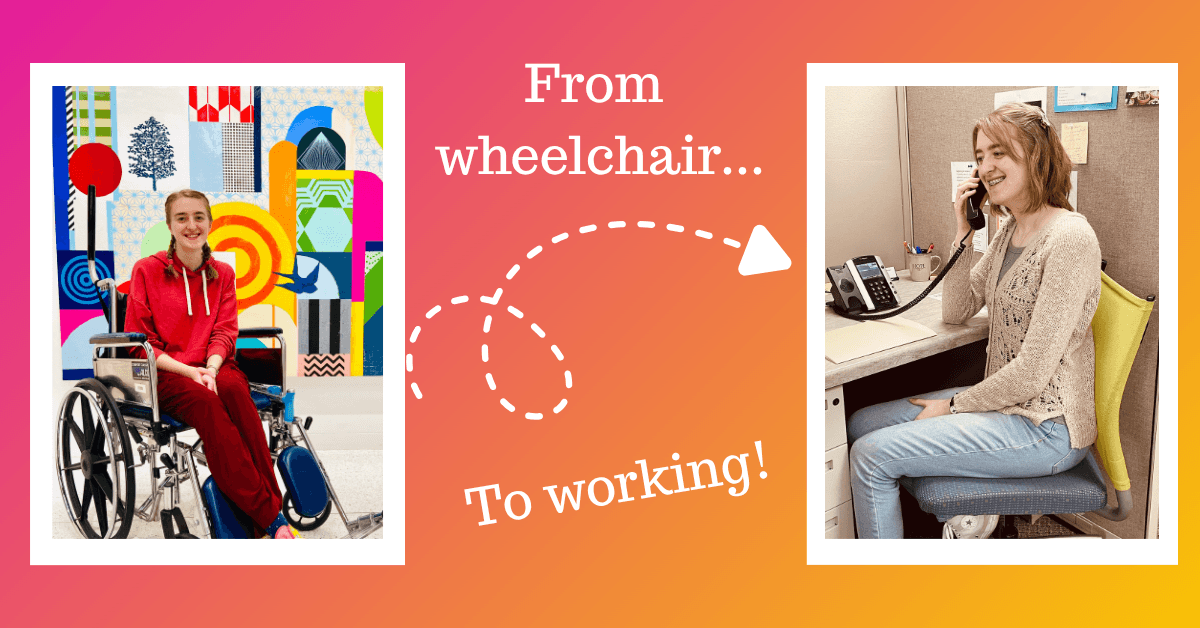
Years ago, I thought there was a 0% chance I’d ever re-enter the workforce – I had a hard enough time keeping myself fed and watered, and being responsible for tasks at a workplace was out of reach. Thankfully, getting treatment and sticking to a routine has enabled me to work about 15-20 hours per week for the last one year (yay!), and I’d love to share some of the tips that have made it possible.
Manage your symptoms to the best of your ability
Before we jump into tips for employment, I have to admit that getting treatment was a critical first step. I know it’s not easy to get care for postural orthostatic tachycardia syndrome (POTS), chronic fatigue syndrome, or other chronic illnesses, but don’t let that stop you from trying. Do some online research on specialists in your state, ask around, or try multiple health systems in your area to find a provider (they might be in general medicine, cardiology, or neurology) who is able to prescribe, treat, and follow your conditions. Having medications and things like physical and occupational therapy have been important to getting me to a place to work.
Whatever your situation is like, being employed starts with managing your condition to the best of your reasonable ability.
Stay in a routine
Living in active recovery means a daily commitment to health, and the more we can build into our daily routine, the easier it will be. If you haven’t already, read my article on how Mayo Clinic got me back to living and thriving. It may look different for you, but I would recommend having a rhythm for taking your meds, drinking enough water, exercising, and eating enough food as the everyday basics.
Having a job can actually help with this! I pace my water intake with my workday, I have one snack and some lunch each day at work, and when I get home I have a routine that includes resting/diaphragmatic breathing followed by a walk around my neighborhood.
This also means I have a weekly meal routine that includes buying food that is accessible, even when I’m tuckered out. Right now I like to have protein cheerios with a chocolate protein drink over the top for breakfast (super quick!). Then I take some bread and chicken or egg salad and make a sandwich to take with me for lunch (with a baggie of salty chips or olives, and a granola bar). For dinner, I like to have rotisserie chicken on hand as well as a pot of rice and some quick veggies. There’s also no shame in a microwave meal on a flare day – do what you need to do to succeed!
Pick a job that’s chill
I used to work in foodservice – timers beeping, people yelling, hot food splashing – this is a great example of what NOT to seek when starting back in the workforce.
What works for me is having a part-time desk job. I’m an office assistant, which means my time is spent answering emails, ordering office supplies, making copies, and greeting clients. I primarily sit in my calm office, with gentle active tasks sprinkled throughout the day. A friend of mine with POTS is a librarian – she said it’s perfect for keeping her nervous system regulated with the quiet environment and gentle labor.
If you’re not quite able to commit to an in-person job, consider alternatives. I made a partial income through selling art on etsy, or you could look for a fully remote job that you can do from home. Consider setting up an appointment with your local Aging and Disability Resource Center (ADRC) to see if you qualify for various programs or disability income as you keep working towards recovery.
Keep communication open
I started at my organization initially as a volunteer as I tested out my ability to work (which I was open about), and so when I was officially hired, my boss already had a loose understanding that I had medical issues that made things tricky. Keeping open lines of communication was important, especially during events such as fainting at work, needing to flex hours to attend medical appointments, or needing off on particularly bad flare days.
In regards to managing symptoms at work (especially faints), sharing small amounts of relevant info has resulted in my coworkers becoming allies. While I would never expect them to help, being open has meant I’ve been offered assistance (like getting me a glass of water), carpooling to and from work (super helpful!), and better advocacy and team cohesion overall.
I acknowledge not all businesses are willing/able to accommodate someone with POTS based on the pace of required work, workplace hazards, etc, but I am grateful to have a team that supports me. Here’s a UK webpage dedicated to educating employers on basic info and possible accommodations if you are looking for something more formal to assist you.
Keep a balanced mindset
Having a job is good for so many reasons, but it’s not always possible.
On the one hand, being productive increases our self esteem. We get to make money, solve problems, and be responsible for ourselves as adults which is good. It is good to exist in a community with coworkers and meeting new people with similar and different life journeys as our own. It is good to apply our minds to something bigger than ourselves, and to do hard things.
On the other hand, sometimes there are things beyond our control. We can do everything right, and still struggle.
Our worth and value does not come from striving or producing, but rather is inherent to the fact that we are people – made in the image of God. Whether we work or stay home, each of us can follow what Jesus considers the two greatest commandments: love the Lord, and love your neighbor as yourself.
We also each have our own timeline. Take a moment to recognize the season that you’re in. Are you at the beginning, feeling overwhelmed by symptoms and daunted by the idea of work? Are you reaching a point of stability and excitedly considering your options? Are you overworking and looking for ideas on how to moderate more appropriately?
We each start somewhere. Every season is different. What may seem out of reach today, may be something you celebrate a year from now. Keep a balanced mindset as you assess your own abilities and learn more about where others are at.
In Summary – Keep Up The Great Work!
To thrive each day, we get to balance productivity, self care, and leisure. Together, let’s keeping doing our best! Not overdoing it, not underdoing it, just, doing it! Keep up the great work of taking one day at a time, and doing your best with the tools, resources, and ability you have, and moving towards a healthy fulfilling life in whatever season you find yourself in.
-

Celebrate the Wins and Keep Going – The Faith Journey
This week marked a big milestone for me in my journey of spiritual and emotional recovery. With the blessing of a community at Celebrate Recovery, I proudly received my 18 month “chip” celebrating the recovery from my personal “hurts, habits, and hangups.” It had me thinking about the faith journey, and how it has many stages. ...
11 September, 2026 No comment -

Ultra-Practical Ways To Make Eating Easier
This article includes ways to moderate energy expenditure while preparing food, low energy meals I love, and little “life hacks” I use as a single-person household with chronic illness. I've talked a bit about getting rid of shame and keeping a solution-based mindset when eating is tough (which you can read about here), but here are my *actual* tips that I think are worth consideration if this is a struggle area for you. Please feel welcome to share your own ideas...
28 August, 2026 2 Comments -

Giving and Receiving Strength When Weary
There is a verse that says "Let us not become weary in doing good, for at the proper time we will reap a harvest if we do not give up." Galatians 6:9 Recently I was struggling, and in my futile efforts to control my life, I found myself weary. While I was tempted to look around jealously at those who seemed to have it easier, I paused, and asked God to come be my strength....
23 August, 2026 No comment

No Comments